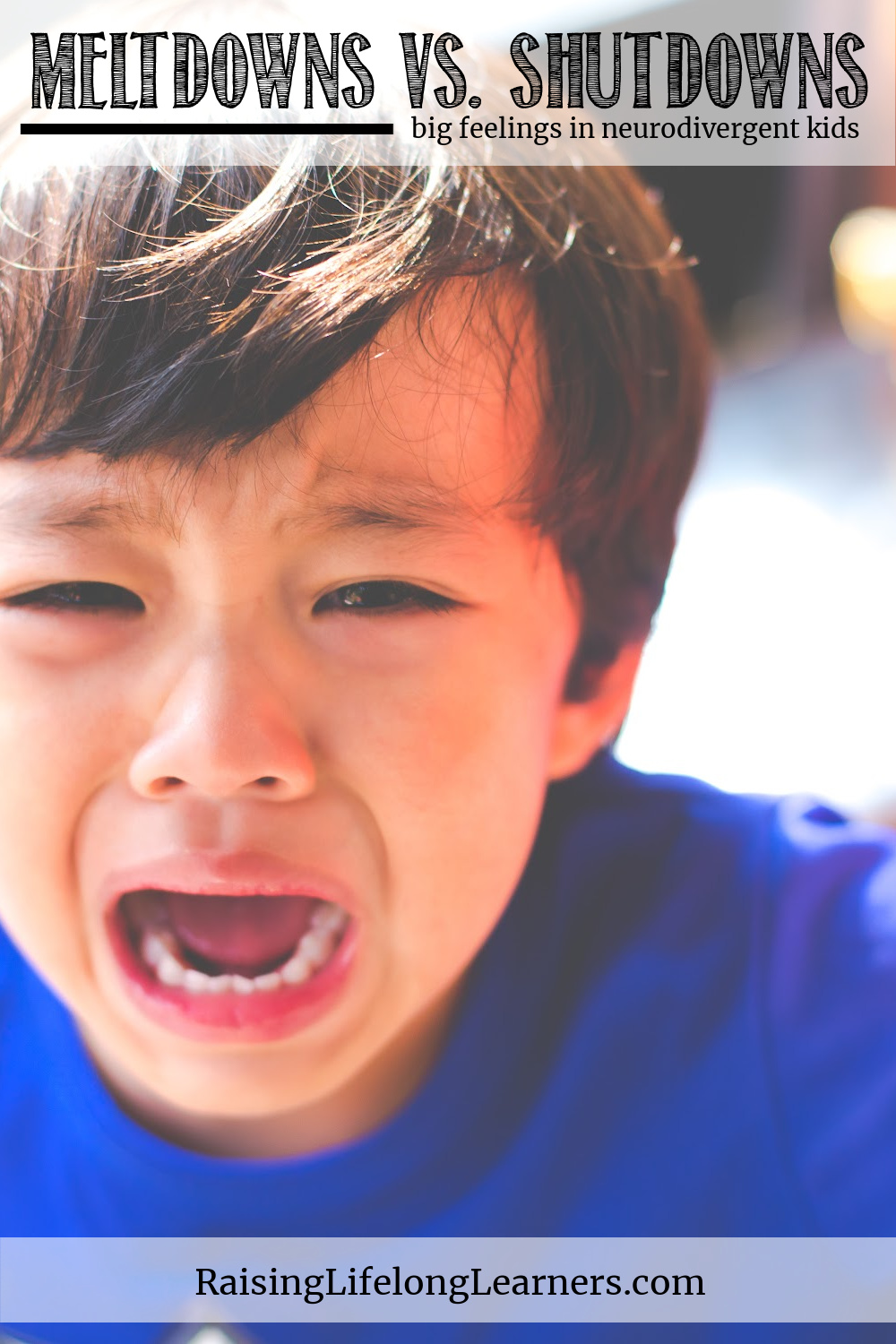

Meltdowns vs. Shutdowns: Understanding and Responding to Big Feelings in Neurodivergent Kids
It’s the same dance over and over—one moment, everyone is fine, and then, suddenly, your child is either in the throes of a meltdown or quietly disappears, nowhere to be found but wrapped up tight in their own thoughts or hiding under a favorite blanket. Homeschool parents know intimately how quickly a day can turn when big feelings move in, and for many of our differently wired kids, those moments of intense emotion aren’t a sign of defiance—they’re pleas for help that rarely sound or look the way we want them to.
The question is this: how do you know if your child is melting down or shutting down? And what can you do about it when your parenting toolbox feels empty and those moments seem to get bigger, not smaller, the harder you try?
Let’s look at the differences, the warning signs, and—most importantly—practical tools you can start using today to help your family weather the storms.
Decoding the Difference: Meltdowns and Shutdowns
Both meltdowns and shutdowns are nervous system responses. They don’t happen because a child simply wants attention, to be difficult, or refuses to behave. They’re ways the brain and body try to protect themselves when everything gets to be just too much.
Meltdowns are what most of us picture—loud, intense, sometimes physically risky. This is the fight-or-flight energy at work. You might see faster speech, pacing, shallow breaths, clenched jaws, or even lashing out physically or verbally. Your child might try to run away, yell, or hurt someone (or something) nearby.
Shutdowns don’t look as dramatic—but they’re just as serious. Shutdown is all about freeze or fawn. The child gets quiet, shrinks into themselves, avoids eye contact, buries into a hoodie or a blanket, answers with one or two words (or goes completely silent), and often seems small, slow, or “not there.” They may unfreeze only hours (or days) later.
The crucial thing: neither response is a choice in the moment. The nervous system takes over, and all the kids are doing is reacting to a sense of overwhelm or danger—real or perceived.
Early Warning Signs: What to Look For
Recognizing what’s coming makes a world of difference in how we respond.
Meltdown signs:
- Speech speeds up or becomes louder
- Jaw clenches
- Pacing or restlessness
- Aggression toward siblings or adults
- Eyes darting or looking for an exit
Shutdown signs:
- Quiet—sometimes total silence
- Avoiding eye contact
- Curling up, hiding under clothes or a blanket
- Slowing down movements or speaking in monosyllables
- Staring off blankly
Environmental triggers like loud, echoey spaces, transitions, demands to stop or start activities, hunger, or fatigue can push kids toward either extreme.
You may like: Navigating Sensory Overload: Actionable Strategies for Kids in Loud Environments

Why This Happens: The Invisible Why
Too often, as parents, we’re left wondering if this is misbehavior, manipulation, or “just a phase.” But meltdowns and shutdowns are rooted in sensory overload, uncertainty, demands, transitions, and underlying conditions like anxiety, PDA (Pathological Demand Avoidance), RSD (Rejection Sensitive Dysphoria), and more.
The key takeaway: These are not choices. They’re not personal. They’re not always avoidable, but they are manageable.
Your Role During Big Feelings: Regulate, Relate, Reason
Here’s the order that truly makes a difference:
- Regulate: Help calm their bodies before doing anything else—keep everyone safe and reduce the intensity.
- Relate: Connect with your child, let them know you see them and they’re not facing this alone.
- Reason: Only when calm returns do you talk it out, reason, or reflect.
Go in this order every time. It’s tempting to ask questions or jump straight to “Why did this happen?” but the brain can’t process logic until safety and connection are restored.
What To Do During a Meltdown
- Lower the risk: Remove breakables, open exits, create space.
- Go quiet: No new demands, keep voice and body slow and low. Short, calm sentences help (“I’m here. You’re safe.”).
- Tag out: If you have a co-parent or another adult nearby, take turns.
- Model calming strategies: Breathe together, demonstrate slowing your own body.
- Heavy work: Push against a wall or chair, carry something heavy, crash into a pillow or bean bag, do pushups or a “tug of war” with a towel.
- Patterned movement: March together for a count of 20, match steps, or pace together.
- Sensory changes: Offer cool water, a warm bath, or a temperature change—sometimes a shock to the senses is what’s needed to break the cycle.
- Consistent language: Use mantras like “I’m here. You’re safe,” “Hands are for pushing walls, not hitting,” or “Let’s crash into the bean bag together.”
If your child can’t handle touch, just be in the room and let them know you’re present, ready when they are. Set boundaries gently but firmly: “I’m not going to let you hurt yourself or anyone else.”
What To Do During a Shutdown
- Reduce sensory input: Dim lights, lower background noise, offer headphones, weighted lap pads, or blankets.
- Offer choices quietly: Things like water, a hoodie, a quiet place, or a calm-down activity—let them choose.
- Grounding objects: Worry stones, thinking putty, or a favorite plush animal can work wonders.
- Sit nearby: You don’t always need to speak—just be close, breathe audibly so your child feels your presence.
- Safe, gentle language: “I’m here if you need me. Squeeze my hand once for yes, twice for no.”
- Don’t force speech or eye contact. Sometimes, all a child can do is exist quietly until their system is ready to come back online.
When they begin to “reanimate,” offer one small action—“Would you like a sip of water?”—then move slowly back toward routine.
You may like: Playful Sensory Learning at Home: Five Senses Spinner

After the Storm: Repair, Reflect, Reset
Everyone calms down. You survived another round. Now what?
- Repair: “That was hard. My job is safety. Your job is to listen to your body. We did it.” Or, “I’m sorry I yelled, I’ll do better next time.” Be human—mistakes are part of the package.
- Reflect: Keep it brief—one or two questions: “What helped you calm down? Is there something we could try next time?”
- Reset: Move the heavy work list where it’s easy to find, keep cold water bottles handy, put headphones by the door, write down what worked (and what didn’t) in a notebook or your calendar.
Sibling Dynamics and Public Place
Meltdowns and shutdowns can be hard on siblings. Teach scripts: “Mom is helping with your brother’s nervous system. Your turn is coming in 15 minutes.” Have a waiting basket with independent activities for them.
If you’re in public, prioritize getting out—no explanations needed. “Lobby break!” or “Let’s walk outside.” Address only safety and calming in the moment; discussion can wait.
Building Your Toolbox
- Create a go-kit: Headphones, tissues, water, thinking putty, a small towel, card games, snacks—keep it in your car or bag.
- Set up a calm-down corner: Soft lighting, sensory toys, audiobook player, water bottle, crunchy snacks.
- Post visuals: Breathing charts, “body color” feelings charts, lists of heavy work or rhythm actions nearby.
Celebrate Small Wins
Measure success in tiny steps, not perfection: “We recovered faster.” “We tried a new strategy.” Kids—especially neurodivergent kids—grow in their ability to recover, not avoid, big feeling moments entirely. And so do parents.
Meltdowns and shutdowns aren’t signs of failure. They’re signals—sometimes loud, sometimes quiet—that our kids need support, safety, and connection. Parenting differently wired kids isn’t about erasing these moments; it’s about learning to respond with compassion and skill. With time (and a hefty collection of tools), your family can weather any storm—together.
RLL #303: Meltdowns vs. Shutdowns: Understanding and Responding to Big Feelings in Neurodivergent Kids
In this week’s episode of the podcast, we dive deep into the signs, strategies, and real-life tips for helping your differently wired kids (and yourself!) navigate emotional storms.
Key Takeaways:
- Practical tools to spot the early cues of meltdowns vs. shutdowns
- Simple, effective co-regulation ideas you can use right now—no fancy equipment needed
- How to repair, reflect, and reset after those tough moments, and so much more
Perfect for homeschool families, parents of neurodivergent kiddos, or anyone wanting to better understand and support big feelings at home. Save this episode and share with a friend who might need these strategies, too!
Links and Resources from Today’s Episode
Thank you to our sponsors:
CTC Math – Flexible, affordable math for the whole family!
Curiosity Post – A Snail Mail Club for kids – Real mail; Real life!
The Learner’s Lab – Online community for families homeschooling gifted/2e & neurodivergent kiddos!
- The Lab: An Online Community for Families Homeschooling Neurodivergent Kiddos
- The Homeschool Advantage: A Child-Focused Approach to Raising Lifelong Learners
- Raising Resilient Sons: A Boy Mom’s Guide to Building a Strong, Confident, and Emotionally Intelligent Family
- The Anxiety Toolkit
- Sensory Strategy Toolkit | Quick Regulation Activities for Home
- Affirmation Cards for Anxious Kids
- Sensory Struggles and Clothes: How to Help Your Child Dress Without Tears
- Navigating Sensory Overload: Actionable Strategies for Kids in Loud Environments
- Building a Sensory Diet Toolbox for Neurodivergent Kids at Home
- Playful Sensory Learning at Home: Five Senses Spinner
- What Exactly is Deschooling.. and Do I Need to Do It?
- Falling Unexpectedly in Love With Homeschooling My Gifted Child
- Self-Care and Co-Regulation | Balancing Parenting and Sensory Needs
- When School Refusal Turns Into a Healing Journey
- Picky Eating | Sensory Struggles and Real Solutions for Homeschooling Families
- Movement on Bad Weather Days: Meeting Sensory Needs at Home