

Navigating Anxiety in Homeschooling: Tools for Calming and Empowering Anxious Kids
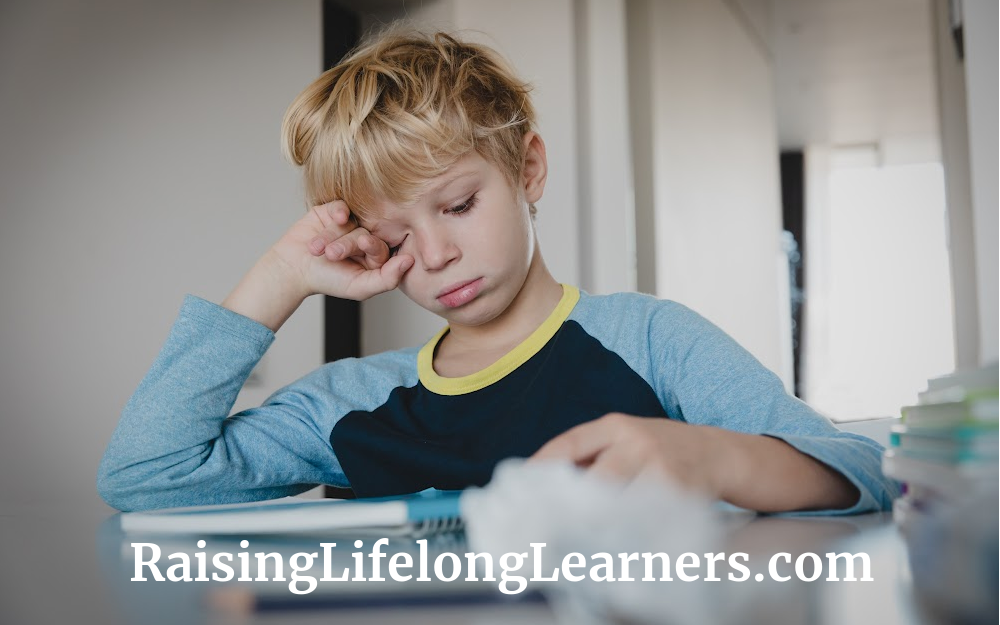
You’re moving along with your homeschool year. The curriculum is chosen, lessons are underway, and, for a little while, everyone seems to find their groove. And then, out of nowhere, your child—completely capable just a day before—hits a wall. Maybe it’s math. Maybe it’s showing up at co-op, or facing an assignment they’ve completed effortlessly in the past. Suddenly, shut down. Meltdown. Excuses. Stomachaches. Angry protest. Tearful refusal.
What is really happening here? Is it defiance? Disinterest? A stubborn streak? Or is it worry—anxiety—showing up in disguise?
When Worry Doesn’t Look Like Worry
For many intense, sensitive, or neurodivergent kids, worry wears a thousand masks. It’s the sullen “I hate math.” The dramatic “I can’t!” The clownish antics to distract from a tough assignment. The endless questions about what comes next. It’s anger, procrastination, perfectionism, distractibility, or even a total emotional shutdown.
Gifted and twice-exceptional kids, in particular, can offer well-reasoned explanations for why they “just can’t” or why the lesson plan is “pedagogically unsound.” Sometimes their arguments hold water—but wading through them, it’s easy to miss that underlying current of anxiety quietly steering the ship.
Why Do Our Kids Worry So Much?
The minds of neurodivergent and gifted kids are often constant kaleidoscopes of observation and possibility. They notice patterns no one else sees, anticipate every conceivable outcome, and can think through problems far beyond their years—while being developmentally unequipped to soothe the resulting emotional storms.
A child might understand that tornadoes are rare but lie awake at night convinced one could destroy the house, simply because they can’t weigh risk with the same nuance as an adult. Another child remembers every time a project took twice as long as it “should” have and dreads ever starting again. These worries aren’t wild figments; often they’re rooted in real experiences, memories, or overwhelming sensitivities to sights, sounds, social dynamics, or abrupt change.
Far from inventing danger out of thin air, neurodivergent kids’ nervous systems tend to catalog every previous upset as evidence—a near-infallible memory that primes them for next time and floods their reasoning with anxious possibility.
When “Don’t Worry” Doesn’t Work
Most of us want to help our kids see that “it’ll be fine.” We list their past successes, assure them there’s nothing to be scared of, or tell them not to worry. But instead of reassurance, these words often amplify their distress. The child, instead of hearing love and protection, may hear “You shouldn’t feel this way” or “Mom doesn’t understand.”
Worry rarely wants information; it wants certainty. And for kids who crave answers—kids who see every loophole and imagine every disaster—there’s no end to the “what if?” spiral. Certainty is impossible. Life is unpredictable. And endless reassurance becomes another cycle without end.
You might like: Anxiety In Children: Physical, Emotional, and Behavioral Symptoms

A Different Approach: Notice Before You Interpret
What if, instead of asking “How do I make this go away?” we asked, “What is this worry trying to tell me about my child’s experience right now?” The goal isn’t to analyze every misstep or mood and call it anxiety, but to get curious about behavior rather than judge or correct it outright.
Questions that help:
- Which part of this feels hardest for you?
- What exactly are you worried might happen?
- Does it feel confusing, too hard, boring, or just really uncomfortable?
- Would it help to know what happens before you begin?
- What might make this feel 10% easier—not perfect, not worry-free, just a tiny bit easier?
By shifting from problem-solving to curiosity, we build connection first and calibrate our response to what the child actually needs in the moment.
Connection Before Correction
Before jumping in with strategies, it’s critical to connect. When a child is overwhelmed, the best comfort sometimes isn’t a perfectly chosen phrase or a silver-bullet solution—it’s just your quiet, steady presence. A gentle “I can see this feels like a lot,” “You really wanted to do this, but now it feels scary,” or simply “I’m here for you” can be enough. Sometimes, it’s the space to not talk at all, allowing the child to regulate before engaging in “fixing.”
Support doesn’t mean making the worry go away. It means joining your child in the hard moment and helping them feel seen, heard, and understood.
Making It 10% Easier
The next step? Don’t aim for “easy” or “worry-free.” The question to ask: “What would make this just a little bit easier?” Maybe you walk into co-op together instead of pushing for independence all at once. Maybe your child presents their project to you first, before a group. Maybe you scribe their thoughts while they find their words for a writing assignment. Maybe you do the first math problem together.
The magical part? These are not rescues, but supports. It’s not “doing it for them”—it’s scaffolding. Over time, your child gathers proof: “I was nervous, I had support, I did a hard thing, I survived. Next time, maybe I can do a little more.”
The Question of Independence
Parents worry: “Am I helping too much? Shouldn’t I push them? Will they ever become independent if I accommodate their worries?”
Here’s the distinction: Support says, “You don’t have to do this alone.” Rescue says, “You never get to discover your own capability.” The sweet spot is a “supportive stretch”—not the absence of discomfort, but not full-blown overwhelm either. Just enough challenge that kids experience nervousness, support, and ultimately, success.
Tiny Choices Build Agency
Agency matters, especially for anxious kids. Choice doesn’t mean picking which subjects to study (when non-negotiable), but rather how to approach tasks:
- Do you want to start with the easy or the interesting problems?
- Would you prefer I sit next to you, across from you, or just be in the same room?
- Want me to check in at 5 or 10 minutes?
Even the smallest decisions give kids a sense of control and partnership in the process, rather than feeling like challenges are being done to them.
You might like: The Anxious Parent of the Anxious Child | Your Anxiety is Not Identical
Your Worry is Not Their Worry
When our kids struggle, our own anxious brains race ahead—imagining a future where they never write, never participate, never sleep alone, never grow independent. Pause and remember: you don’t need to solve age 28 when you’re trying to get through Tuesday morning math. Meet your child’s needs in the moment, not the worst-case scenario in your imagination.
Sometimes, the right move is backing off. When nervous systems are overloaded and no learning is happening, “We’re done for today” is the wisest call. Pausing isn’t surrendering; it’s regulating and regrouping for another try.
Building Capability, Not Perfection
After a tough moment, debrief together (once calm). Talk about how worry feels in their body, what helps, what makes it worse, how they’d like you to support them next time, and what small self-talk or comfort works for them. The goal isn’t creating a rigid protocol, but helping your child recognize the signs—and trust that they have tools, allies, and a path forward.
No one can promise their children a worry-free life. But you can raise kids who recognize their own anxious feelings, know how to ask for help, tolerate uncertainty bit by bit, and recover when things don’t go as hoped. That is a powerful legacy.
Your child doesn’t need every obstacle smoothed out in advance. They need someone beside them in the hard, someone who can say, “I see this is tough. Let’s find the next step you feel you can manage.”
Maybe the goal isn’t a life without worry. Maybe it’s learning that when worry shows up, you and your child both know what to do next—together. Over time, those tiny, supported steps add up to resilience. And that’s what will carry them forward, no matter what challenges (or worries) come next.
RLL #328: Navigating Anxiety in Homeschooling: Tools for Calming and Empowering Anxious Kids
Have you ever watched your child freeze, panic, or shut down over something you know they can do? It can be so frustrating and heartbreaking—especially when you just want to help them move forward.
In this week’s episode of the podcast, Colleen dives into what’s really happening when worry takes over for our intense, sensitive, gifted, or twice-exceptional kiddos.
Key Takeaways
- Notice Before You Interpret: Get curious about your child’s worry instead of jumping to fix or dismiss it. Understanding comes first.
- 10% Easier Wins: Don’t chase perfection—aim to make tasks just 10% easier so anxious kids can take their next step.
- Support Isn’t Rescue: Offer help and choices that let your child stretch, but never push them into overwhelm. Agency builds confidence.
- Reassurance Has Limits: “Don’t worry” doesn’t work—validate your child’s experience, then collaboratively break challenges into smaller, doable steps.
- Progress Over Perfection: Pausing or changing course isn’t failure. Facing worry with tools, support, and small steps leads to real growth.
Links and Resources from Today’s Episode
Thank you to our sponsors:
CTC Math – Flexible, affordable math for the whole family!
The Learner’s Lab – Online community for families homeschooling outside-the-box learners!
- The Lab: An Online Community for Parents Homeschooling Neurodivergent Kiddos
- The Homeschool Advantage: A Child-Focused Approach to Raising Lifelong Learners
- Raising Resilient Sons: A Boy Mom’s Guide to Building a Strong, Confident, and Emotionally Intelligent Family
- The Anxiety Toolkit
- Sensory Strategy Toolkit | Quick Regulation Activities for Home
- Affirmation Cards for Anxious Kids
- Performance Anxiety, Assessments, and Our Complex Kids
- Traveling with Kids Who Struggle with Anxiety
- Helping Our Children: The Lies Anxiety Tells Us
- When A Child’s Anxiety Looks Like Anger
- Practical Strategies For Helping Anxious Kids
- Anxiety and Learning: What You Need To Know
- Anxiety In Children: Physical, Emotional, and Behavioral Symptoms
- Anxiety vs. Stress vs. Perfectionism: Helping Our Children Cope
- Helping Anxious Children And Their Siblings
- The Anxious Parent of the Anxious Child
- Great Gifts for Children with Anxiety
- Engaging Your Anxious Child in Social Justice
- The Anxious Parent of the Anxious Child | Your Anxiety is Not Identical