When Passions Turn Into Pathways | Rethinking Motivation and Learning for Neurodivergent Kids
There’s a certain pride that comes with seeing your kid spend hour upon hour meticulously building in Minecraft, memorizing every prehistoric era and creature, or scripting pages of dialogue for a Dungeons and Dragons campaign. And then, just when you feel like you’ve cracked the “motivation” code, that same child will melt down over a fifteen-minute math worksheet. Maybe you recognize your child in this scenario – a tornado of interest and passion, but a brick wall of resistance when it comes to anything “school-ish.”
What if I told you that this tension isn’t about lazy kids or failing curriculum, but a misalignment between traditional educational approaches and the unique ways neurodivergent kids learn? Let’s unpack why leveraging special interests and shifting to project-based, interest-driven learning isn’t just a strategy – it might be the missing piece for many of our kids.
Is It Motivation or Something More?
For so long, many of us have asked ourselves, “Why won’t my child just do the assignment?” You wonder if it’s a motivation issue, or maybe something deeper—like executive dysfunction. What you often discover is that neurodivergent kids (think: ADHD, autistic, or twice-exceptional) aren’t driven by the promise of a sticker chart or a completed worksheet. Their brains crave meaning, novelty, and most of all, connection.
So here’s the million-dollar question: how do we turn what our children already love—those obsessions, fascinations, and hyperfocuses—into something that ignites real learning, not just busy work or another power struggle?
The Fine Line: From Passion To Pressure
It’s tempting, when you recognize the magnetic pull of Minecraft or the encyclopedic devotion to train facts, to turn every interest into a lesson plan. But here’s the risk: when interests become just another assignment, kids will stop sharing what they love, walling off their passions to protect them from being “schoolified.” Just as turning a beloved hobby into a business can sap the joy, forced learning can make kids retreat from what once delighted them.
Sometimes, we need to protect their passions from learning. And sometimes, we can use them as a doorway—not a dragnet.
You might like: Project Based Learning And Your Gifted Child: A Guide For Parents
Why Interests Are Not Distractions
Here’s a radical thought: the obsession with Roblox, the hours spent categorizing Pokémon, the relentless world-building in a fantasy notebook—these aren’t distractions from real learning. For so many neurodivergent kids, those interests are the learning pathway.
Interest is dopamine gold for these developing brains. It’s not just that they enjoy it, it’s that it flips the switch from “Why bother?” to “I need to figure this out.” When a kid has agency and emotional connection, the learning sticks and goes deep—deeper than any worksheet ever could.
When Boredom Becomes Destruction, Not Creativity
We’ve all heard the advice: “Just let kids be bored—creativity will blossom.” For plenty of neurotypical kids, sure. But boredom in neurodivergent kids can lead to poking the bear—stirring up trouble, orchestrating chaos, or fixating on things that are anything but creative. These kids crave novelty, challenge, and purpose. Without it, things can fall apart quickly.
Autonomy, novelty, and meaningful engagement can shift the entire nervous system response, unlocking not just motivation but also joy.
Contextual Learning: Not Inconsistency, But Genius
It’s easy to feel baffled by a kid who refuses to write more than a sentence for a school assignment, then spends hours writing an elaborate Minecraft guide or world history for their fantasy novel. Or maybe your “math averse” child is performing complex calculations with Redstone circuits. This isn’t inconsistency. It’s contextual, passion-driven learning.
Our challenge is to recognize those contexts, harness them, and use them as bridges to broader skills and knowledge—not as traps.
Building Project Pathways—Step By Step
Instead of pushing harder on traditional curriculum, try starting from where your child already finds fascination and flow. There’s a four-step framework that can help you take your child’s “thing” and create a meaningful project pathway.
1. Start with Fascination
- What does your child come back to, again and again?
- What are the interests, hobbies, and play that have real staying power?
Don’t filter for what’s “educational” enough. Embrace what they love as it is.
2. Build Sideways, Not Away
Rather than hijacking an interest and steering it toward a school subject, expand outward. For example, Minecraft might segue to architecture, history, or collaborative planning. Pokémon can broaden into biology, statistics, or taxonomy. Let the interest radiate, rather than redirecting.
3. Add a Real-Life Project
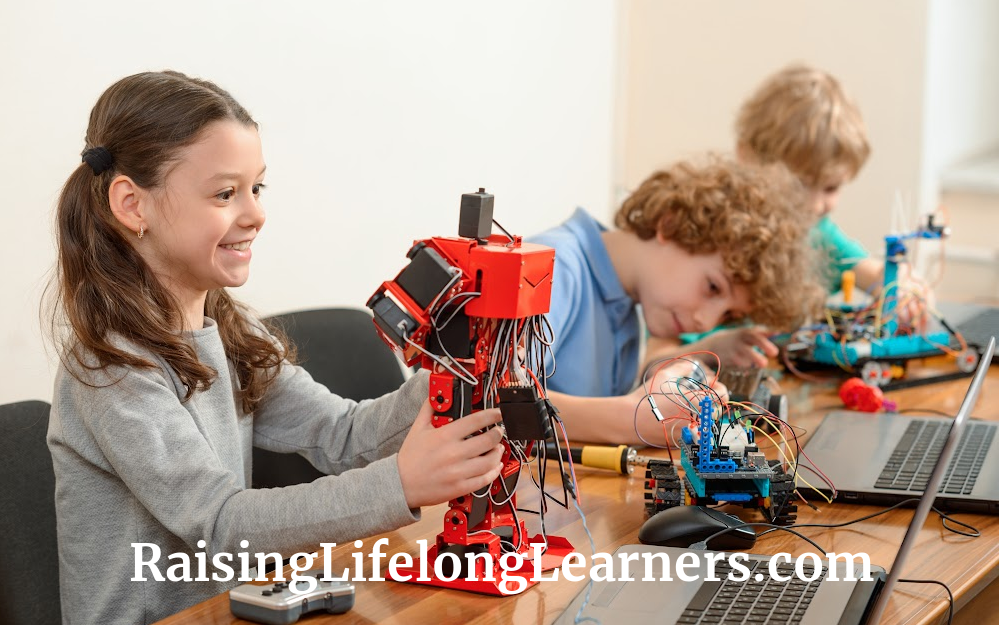
Learning deepens when kids create, build, share, or solve something real. Their Pokémon obsession can lead to writing guides, the Minecraft focus to designing a functioning city complete with bylaws and budgets, or that passion for bugs to compiling a field guide of backyard critters.
4. Pull the Skills Along—Gently
Resist the urge to “lesson-ize” everything. Instead, gently embed needed skills into the process—asking questions, collaborating, calculating, mapping, writing instructions. Make these part of the project conversation, not the project’s burden.
But What About The Gaps?
Every parent—especially homeschoolers—worry about gaps. Truth bomb: everyone has learning gaps, including kids in the most prestigious schools. Traditional systems create gaps too, just different ones.
Our real job as educators is to raise kids who can learn what they don’t yet know, who aren’t ashamed of seeking answers, and who see themselves as capable, lifelong learners. It’s about equipping for persistence, curiosity, and the ability to fill those gaps—on their own.
You might like: RLL #101: Project-Based Learning with Cindy West
And What If They Only Want One Thing?
Is it bad if a child spends hours on one deep interest? Actually, depth isn’t dangerous. For many neurodivergent kids, special interests are regulation strategies and confidence builders. Sure, the world might not always need a Roblox expert—but the communication, logic, and creative skills developed there will transfer. In a world that’s changing faster than ever, depth can open unexpected future pathways in ways we can’t predict.
The Great Screen Debate
Here’s the big one—what if their passion is all on screens? Before panic sets in, ask yourself: are they creating, or just zoning out and consuming content? Are they communicating, designing, strategizing, or problem-solving?
Screens are here to stay. The challenge is steering usage toward creation and connection, building in offline extensions (sketching designs, writing stories), and setting boundaries with empathy rather than punishment. It’s not easy—some days it’s two steps forward, one step back. But when screens become tools, not crutches, they can be a powerful part of the learning landscape.
Real-World Examples (That Aren’t Just Worksheets)
- Minecraft City Project: Design an economic system, create local laws, budget for resources, collaborate with others—all within the game, and all laced with real-world skills.
- Theater-Obsessed Kids: Dive into script analysis, create costumes, design stages, study historical periods, manage projects with a team.
- Pokémon Hyperfocus: Categorize, analyze stats, write guides, draw evolutions—a deep dive into classification, communication, and research.
Learning That Sticks—And Why It Matters
When kids feel competent and safe, when curiosity leads, and when learning is attached to what matters to them, that’s when things stick. That’s when they move from resistance to excitement, from shutting down to lighting up. You don’t have to fight against your child’s interests—instead, let those interests become the path, the bridge, and the spark.
What is often seen as “just a hobby” may very well be your child’s greatest educational asset. Trust it. Expand it. And meet them where the magic happens. That’s where real learning blooms, for a lifetime.
RLL #314: When Passions Turn Into Pathways: Rethinking Motivation and Learning for Neurodivergent Kids
In this episode, we dive deeper into the topic of motivating our kids, especially when traditional schoolwork leads to resistance or meltdowns. Building on last week’s discussion about motivation versus executive dysfunction, this week’s episode explores the power of project-based and interest-led learning—especially for neurodivergent kids.
From transforming a love of Minecraft or Pokémon into meaningful educational experiences, to finding the right balance between leveraging special interests and avoiding burnout, we unpack practical strategies to engage children in their education.
Find out why interests are often the doorway to deep learning, discover the four-step project pathway framework, and gain confidence to embrace creative, child-focused educational approaches—while addressing common parental concerns about gaps, screens, and specialization.
Whether you’re homeschooling or simply looking to inspire lifelong learning in your child, this episode is packed with encouragement and actionable tips to help every learner thrive.
Key Takeaways
- Harness Special Interests: Use your child’s passions—like Minecraft, Pokémon, or theater—as the starting point for deeper learning and engagement.
- Build Sideways, Not Away: Expand on what excites your child by connecting related skills and subjects, rather than forcing a hard turn to traditional academics.
- Project Power: Anchor learning in real-life projects, from creating Minecraft cities to designing bug field guides, making skills and knowledge truly stick.
- Honor Depth and Autonomy: Let your child dive deep into what they love and give them a say in how they learn; this fosters motivation, connection, and persistence.
- Gaps Are OK: Every learning path has gaps—focus on teaching kids how to find answers, build confidence, and adapt to an ever-changing world.
Links and Resources from Today’s Episode
Thank you to our sponsors:
CTC Math – Flexible, affordable math for the whole family!
The Learner’s Lab – Online community for families homeschooling outside-the-box learners!
- The Lab: An Online Community for Families Homeschooling Neurodivergent Kiddos
- The Homeschool Advantage: A Child-Focused Approach to Raising Lifelong Learners
- Raising Resilient Sons: A Boy Mom’s Guide to Building a Strong, Confident, and Emotionally Intelligent Family
- The Anxiety Toolkit
- Sensory Strategy Toolkit | Quick Regulation Activities for Home
- Affirmation Cards for Anxious Kids
- Executive Function Struggles in Homeschooling: Why Smart Kids Can’t Find Their Shoes (and What to Do About It)
- How Adventuring Together Grows Confidence, Curiosity, and Executive Function
- Understanding Executive Function Skills in Gifted and Twice-Exceptional Children
- Strengthening Executive Function Skills: A Conversation with Sarah Collins
- Strengthen Executive Function Skills
- The Best Books for Teaching About Executive Functions Skills
- 7 Executive Functioning Activities for Small Children
- RLL #84: Exploring Education and Executive Function with Seth PerlerThe Unmeasured Executive Functioning Issue
- RLL 20: Helping Your Kiddo with Executive Function Skills Struggles | A Listener Question
- RLL LIVE | Improving Executive Functions
- Helping Kids Who Resist: Low-Demand Homeschooling for Autonomy and Skill-Building
- Why Is Finishing So Hard? Helping Neurodivergent Kids Cross the Finish LineWhy Typical Organization Systems Fail Neurodivergent Homeschoolers and What Works Instead