
Creating Home Systems That Support Executive Function for Neurodivergent Kids
Raise your hand if you’ve ever asked your child to “just get started” on a task, only to find them spinning in circles, paralyzed by too many choices or distractions. Or, maybe you find yourself regularly reminding everyone where things go, and still, it’s a scavenger hunt every morning trying to get out the door. If any of this sounds familiar, your family may be bumping up against challenges related to executive function.
Executive function skills—planning, organizing, remembering, transitioning—are so much more than just motivation or “trying harder.” They’re foundational skills for daily life, learning, and well-being, and for some kids, especially neurodivergent ones, these don’t automatically grow just because someone reminded them (again) to clean their room or pack their bag.
What if your home could actually help with that? Not by being a perfectly organized Pinterest dream, but by offering gentle, reliable support right where your child (and you!) need it. Here’s what that looks like.
When the House Itself Gets in the Way
Research shows that clutter can quickly translate to overwhelm—especially for individuals with executive function struggles. A cluttered room doesn’t just look messy; it can send a child (or adult) right into “shutdown mode,” stuck before they even start. The goal isn’t a gleaming, color-coded space. It’s creating environments—systems, zones, and cues—that lighten the brain’s load instead of adding to it.
It’s not about discipline. It’s not about motivation. So often, it’s the design of our routines and environment that can solve challenges that lists or pep talks never will.
Why Environment Matters for Executive Function
Picture your child who loses things, leaves projects everywhere, forgets routines, and needs constant reminders. Sound familiar? It may not be a lack of motivation. Often, it’s the environment silently asking their brain to juggle more than it reasonably can. For neurodivergent kids especially, this cognitive load can be exhausting, stretching their mental energy thin before the day even begins.
Every time your child has to figure out where something goes, how to get started, or remember what’s next, that’s energy expended. Move those decisions from inside their head to the environment around them, and life gets lighter.
You might like: The Best Books for Teaching About Executive Functions Skills
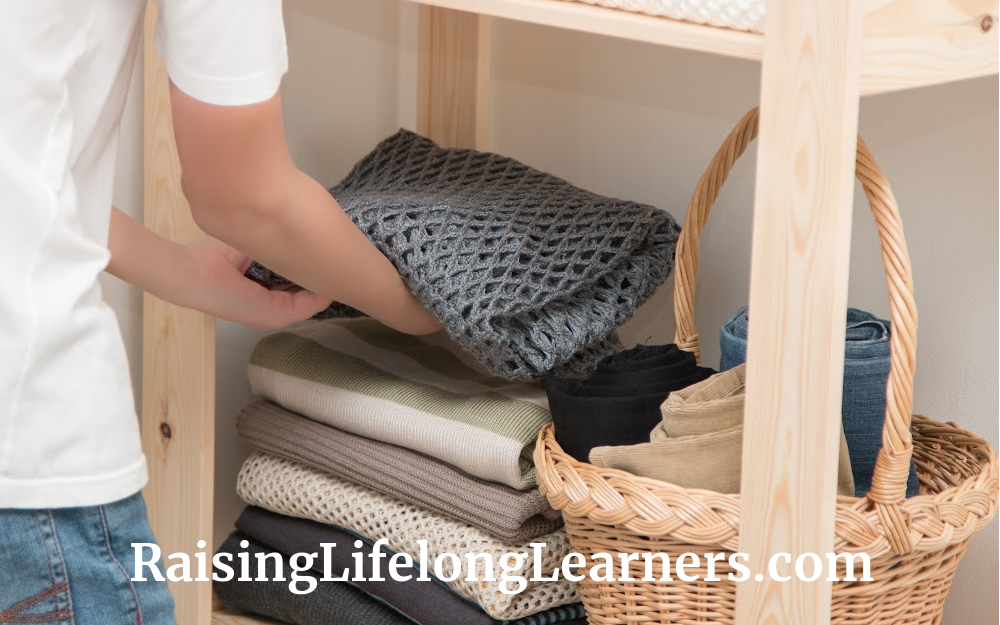
Zones: Give Every Activity Its Place
One of the simplest ways to reduce the daily mental marathon is to create clear “zones” in your home. A zone answers the basic question: what happens here?
Reading Zones: Where are the books? Is there a comfy beanbag or favorite chair? Maybe it’s a collection in the family room or a nook in each bedroom. When your kid wants to read, there’s a clear and inviting place for it.
Creative Zones: Where do the art supplies live? Instead of a closet that’s always being raided, maybe your teenager keeps her favorite materials up in her room, pipe cleaners and glue within arm’s reach when inspiration strikes.
School Zones: Every lesson, project, and school supply shouldn’t be scattered room to room. Baskets or bins in a consistent place (even if it’s the dining room-turned-schoolroom) mean when it’s time to work, the brain isn’t burned out searching for “that one notebook.”
Launch Zones: Getting out the door is its own Olympic event. Create a spot near the exit with a bin for each kid’s shoes, coats, bags, and library books. When it’s time to go, everything is in its predictable spot.
Recharge Zones: We all need a place to recover. Soft light, headphones, a favorite fidget, maybe a gratitude journal—a calm-down corner tells your child’s brain: “You’re safe to rest here.”
The more obvious these spaces and their purposes, the less remembering is required and the more energy is available for actual living and learning.
“A Home for Everything”—and Not Just Temporarily
Every frequently-used item deserves a real home… not a temporary drop spot, not what Pinterest recommends, and not what “sounds logical” to relatives. Ask, “where would my child naturally look for this first?” That’s where it belongs.
If you end up buying multiple pairs of reading glasses just to keep one near every place you need them (desk, reading nook, kitchen, car), you’re doing it right. It’s about minimizing the search-and-retrieve process and having what you need, where you need it.
Think chargers, headphones, library books, water bottles—if it’s always used on the couch, have a charger there; if library books get lost, keep them near the door in a bag. The easier it is to put something away, the more likely it’ll happen, and the less you’ll have to remind, search, and stress.
Visual Cues Beat Verbal Reminders (Almost) Every Time
You transform from “walking reminder system” into a peaceful, empowered parent the second you put up a visual cue. Instead of endlessly saying “don’t forget your shoes,” try a checklist or a label. Index cards with lists taped inside cabinets, color-coded calendars, sticky note reminders—these are your new superpowers.
Labels aren’t just for kitchen containers. They can go on shelves in the schoolroom, art bins, even on bags dedicated to specific activities (one for dance, one for rehearsal, one for co-op). When everything has a clear, labeled place, chaos melts away.
You might like: Understanding Executive Function vs Motivation in Neurodivergent Learners

Start Small: The Power of the Launch Zone
If all you do is set up a launch zone—a place where all “out-the-door” items live—your mornings will immediately get smoother. Shoes, coats, key bags, and any “must-bring” items live in one area. When you’re done with a library book, return it to the library bag in the launch zone. When a return comes home, it goes to this spot so it’s ready for the next errand run.
This is the antidote to last-minute scrambles, forgotten soccer cleats, and missing keys. And yes, adults need launch zones too!
When (Not If) Systems Break Down
Life changes, routines shift, and sometimes what worked stops working. This isn’t a failure, and it’s not your fault. Good systems should serve people, not the other way around. If something is too complicated, too hidden, or in the wrong place, just adjust. Maybe needs have changed; maybe visibility is the issue. Out of sight, out of mind is especially real for neurodivergent kids. Keep frequently-used things clearly visible and accessible.
Don’t overhaul everything at once. Pick one trouble spot—often the launch zone—and start there. Build one small success, let everyone adjust, and then try another. Layer by layer, you’ll see more connection, less stress, and more energy for what matters most.
Your Home Isn’t Meant to Be Perfect—Just to Work for You
Executive function isn’t just something you teach; sometimes it’s something you design for. When your environment carries part of the load—by giving clear cues, logical homes for things, predictable routines—you free up precious energy for connection and creativity.
Your house doesn’t need to look like a magazine. It just needs to work for your actual family, honoring the brains that live there.
Take a breath. Tweak that one space. Watch what happens when life feels a little bit lighter.
You’re building a home—not just four walls, but a place that truly supports the growth, dignity, and well-being of everyone under your roof. And that is where thriving begins.
RLL #321: Creating Home Systems That Support Executive Function for Neurodivergent Kids
In this week’s episode of the podcast, the conversation focused on the critical role of home environment and systems in supporting executive function—especially for neurodivergent families. It’s not about Pinterest-perfect organization, but about designing spaces and routines that work with your brain, not against it.
Key Takeaways
- Design Over Discipline: Many executive function challenges are solved through smart environment design, not just motivation or checklists. Moving decisions from the brain into the environment can reduce overwhelm and increase independence.
- Zones Make Life Easier: Creating dedicated zones—like reading nooks, creative spaces, launch zones near exits, and recharge corners—helps reduce cognitive load and makes daily transitions smoother.
- Visible, Forgiving Systems Win: The discussion explored the power of visual cues (checklists, labels, color coding) over constant verbal reminders. Systems should be simple, obvious, and evolve as your family’s needs change.
Links and Resources from Today’s Episode
Thank you to our sponsors:
CTC Math – Flexible, affordable math for the whole family!
The Learner’s Lab – Online community for families homeschooling outside-the-box learners!
- The Lab: An Online Community for Families Homeschooling Neurodivergent Kiddos
- The Homeschool Advantage: A Child-Focused Approach to Raising Lifelong Learners
- Raising Resilient Sons: A Boy Mom’s Guide to Building a Strong, Confident, and Emotionally Intelligent Family
- The Anxiety Toolkit
- Sensory Strategy Toolkit | Quick Regulation Activities for Home
- Affirmation Cards for Anxious Kids
- Why Typical Organization Systems Fail Neurodivergent Homeschoolers and What Works Instead
- Homeschool Planning For Kids: Helping Your Child Get Organized
- Organizing Your Homeschool in a Tiny House
- Executive Function Struggles in Homeschooling: Why Smart Kids Can’t Find Their Shoes (and What to Do About It)
- How Adventuring Together Grows Confidence, Curiosity, and Executive Function
- Understanding Executive Function Skills in Gifted and Twice-Exceptional Children
- Strengthening Executive Function Skills: A Conversation with Sarah Collins
- Strengthen Executive Function Skills
- The Best Books for Teaching About Executive Functions Skills
- 7 Executive Functioning Activities for Small Children
- RLL #84: Exploring Education and Executive Function with Seth PerlerThe Unmeasured Executive Functioning Issue
- RLL 20: Helping Your Kiddo with Executive Function Skills Struggles | A Listener Question
- RLL LIVE | Improving Executive Functions
- Helping Kids Who Resist: Low-Demand Homeschooling for Autonomy and Skill-Building
- Why Is Finishing So Hard? Helping Neurodivergent Kids Cross the Finish Line
- Why Typical Organization Systems Fail Neurodivergent Homeschoolers and What Works Instead